
In this article
Share with your community!


Edited & Reviewed
 Edited & Reviewed
Reading time 12 mins
Updated on February 5, 2026
In this article
Share with your community!
Every IT (and finance) leader wants predictable budgets, but most are losing control of them for a simple reason: computers are being replaced too early.
Age-Based Replacement Policies Lead IT Teams to Replace 80% of Endpoints Too Early
Applixure has analysed thousands of computers across multiple environments, and we see roughly 80% (sometimes up to 90%) of devices are replaced while still in good condition. Not because they’ve failed, but because policy says it’s time.
That single assumption: “three or four years equals end-of-life”, quietly drains up to 40% of your annual end-point replacement budget, creates unnecessary e-waste, and keeps IT teams locked in reactive cycles instead of proactive improvement.
The problem isn’t effort or intent. It’s visibility. Without real data on how devices actually perform, leaders are forced to make expensive guesses.
This is where a condition-based replacement policy changes the game. When IT knows which computers are truly near failure and which can keep going, every decision, from budgeting to planning, becomes smarter, cheaper, and easier to defend.
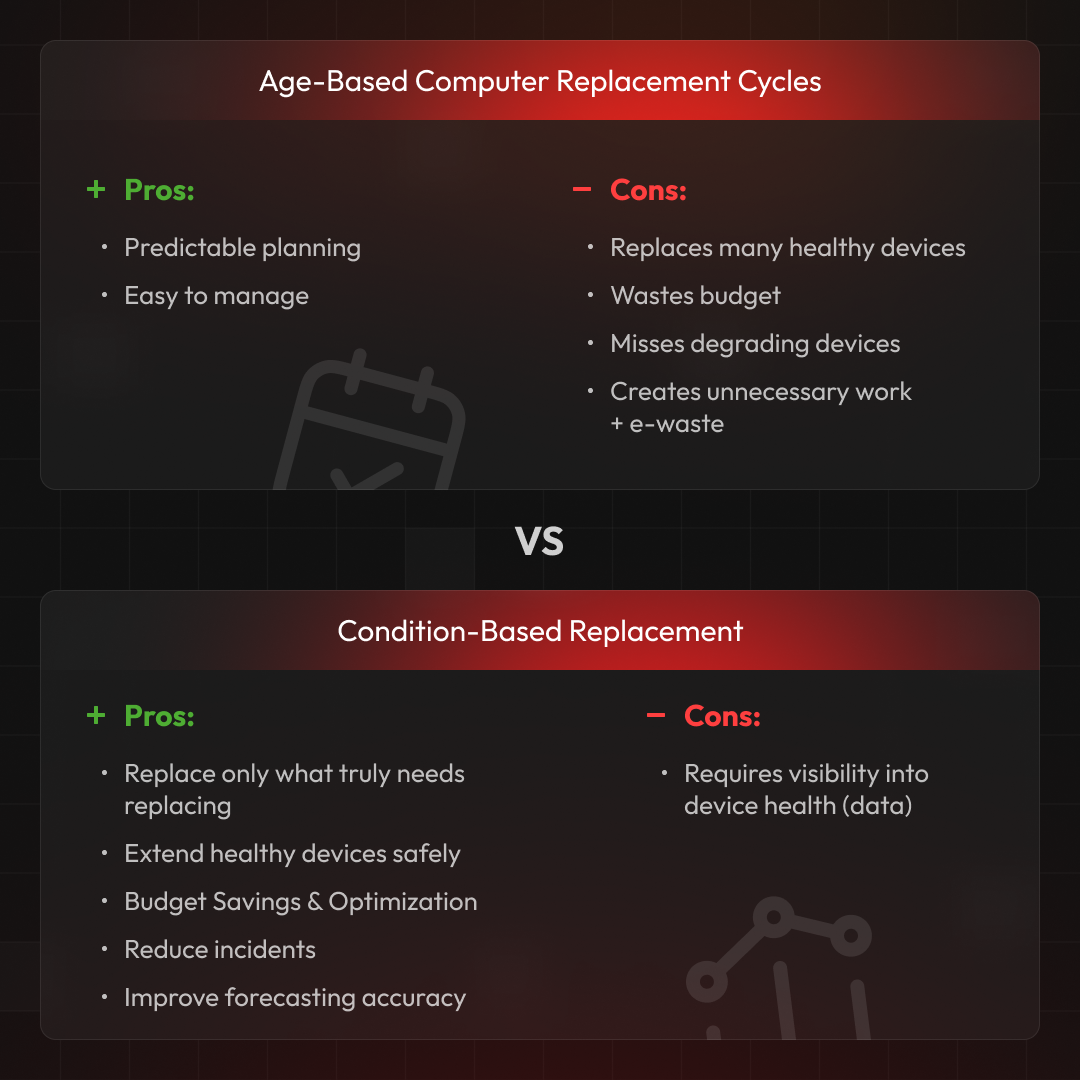
Age-Based Lifespans Ignore:
Hardware Condition & Software Performance
Most IT environments still operate on fixed lifespan policies, three or four years, then replace. It’s simple, predictable on paper, and fits neatly into annual budget cycles. But the reality underneath is very different.
Computers don’t age by calendar or spreadsheet; they age by use, environment, and maintenance. Some degrade fast, others stay reliable for years beyond their calendar-based “expiry date.” And in today’s world, device aging has become far more complex.
Modern IT environments are hybrid, distributed, and diverse:
- Hybrid work has changed how devices age and perform.
- Usage varies massively between employees and roles; a developer’s laptop experiences far more strain than an administrative workstation.
- Security, manageability, and user experience all play into replacement timing, making blanket policies obsolete.
Without a clear picture of fleet and device health, IT teams are managing blind. When decisions are based purely on time, IT ends up replacing healthy, high-performing devices simply because they’ve reached a policy threshold. That means unnecessary costs, lost productivity during setup, and additional environmental impact, all to avoid the risk of failure that might never have occurred.
At the same time, devices that truly need attention, with slow boot times, high failure rates, or worn-out batteries, often slip through until users start complaining. The result is a mix of wasted spend and hidden problems, both caused by a lack of visibility.
Lifespan policies based on age create a false sense of control. Budgets may look predictable in spreadsheets, but underneath, they’re built on averages and assumptions, not the real condition of your endpoint fleet.
To truly optimize cost, reliability, and planning accuracy, IT needs a shift: from age-based to condition-based lifespan policies.
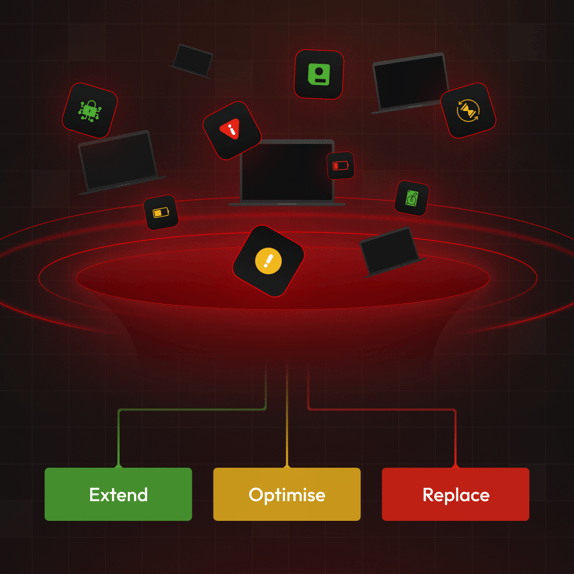
Turning Scattered Signals into Intelligent Lifespan Decisions
The next step for IT maturity isn’t more work or overhead, it’s smarter use of the data you already have.
Every computer generates a constant stream of signals: boot times, battery wear, disk performance, software stability, patch levels, encryption compliance, and many more signals. Hidden in that noise is the truth about which devices are healthy, which are at risk, and which truly need replacing.
Lifespan intelligence is about turning that data into clarity. When IT leaders can see the full picture of device condition and behavior, replacement planning becomes a strategic process, not a guessing game.
Instead of a static 3 or 4-year cycle, IT can now make condition-based lifespan decisions:
- Extend lifespans for well-performing devices.
- Fix those starting to degrade.
- Replace only where necessary.
This shift doesn’t just optimize hardware use; it improves how IT operates:
- Proactive: Issues surface before users report them (Important: 53% of IT issues never get reported).
- Efficient: Time and budget focus on what truly matters.
- Credible: Decisions can be backed by evidence, not opinion.
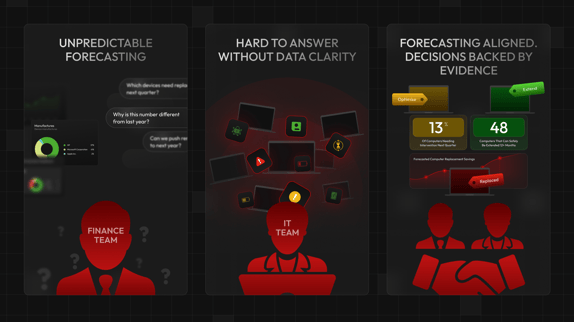
And most importantly, it aligns IT and Finance. When replacement forecasts are based on real performance data, both sides can trust the numbers. IT gains flexibility. Finance gains predictability.
That’s the foundation of modern, data-driven IT leadership, one that’s guided by insight instead of assumption.
This is exactly what Applixure Analytics enables. Applixure’s lightweight, pre-configured agent starts collecting device health and performance data within minutes. That data is automatically translated into a clear, easy-to-use overview of device condition, risks, and replacement readiness. IT teams gain immediate visibility into which devices can be safely extended, which need attention, and which truly require replacement.
Your Next Step in IT Budgeting:
Condition-based Lifespan Forecasting
For most IT leaders, budget forecasting is a balancing act between uncertainty and expectation. You’re expected to predict replacement costs a year or more in advance, often without knowing which devices will actually fail or survive that long.
That’s where data-driven lifespan quality management changes the equation. When you know the real health and risk profile of your fleet, you can forecast with confidence, not estimates.
Instead of replacing devices on a fixed schedule, you can model:
- What percentage of the fleet will likely need intervention next quarter(s).
- Which devices can safely be extended by 12 months.
- What the true financial impact will be if lifespans are extended or optimized.
This level of visibility turns replacement planning into a measurable process:
- Budget accuracy improves, forecasts align with actual device needs.
- Spending drops, healthy devices stay in use longer.
- Waste decreases, fewer unnecessary replacements and setups.
- Workload lightens, IT avoids the logistical overhead of managing hundreds of avoidable swaps.
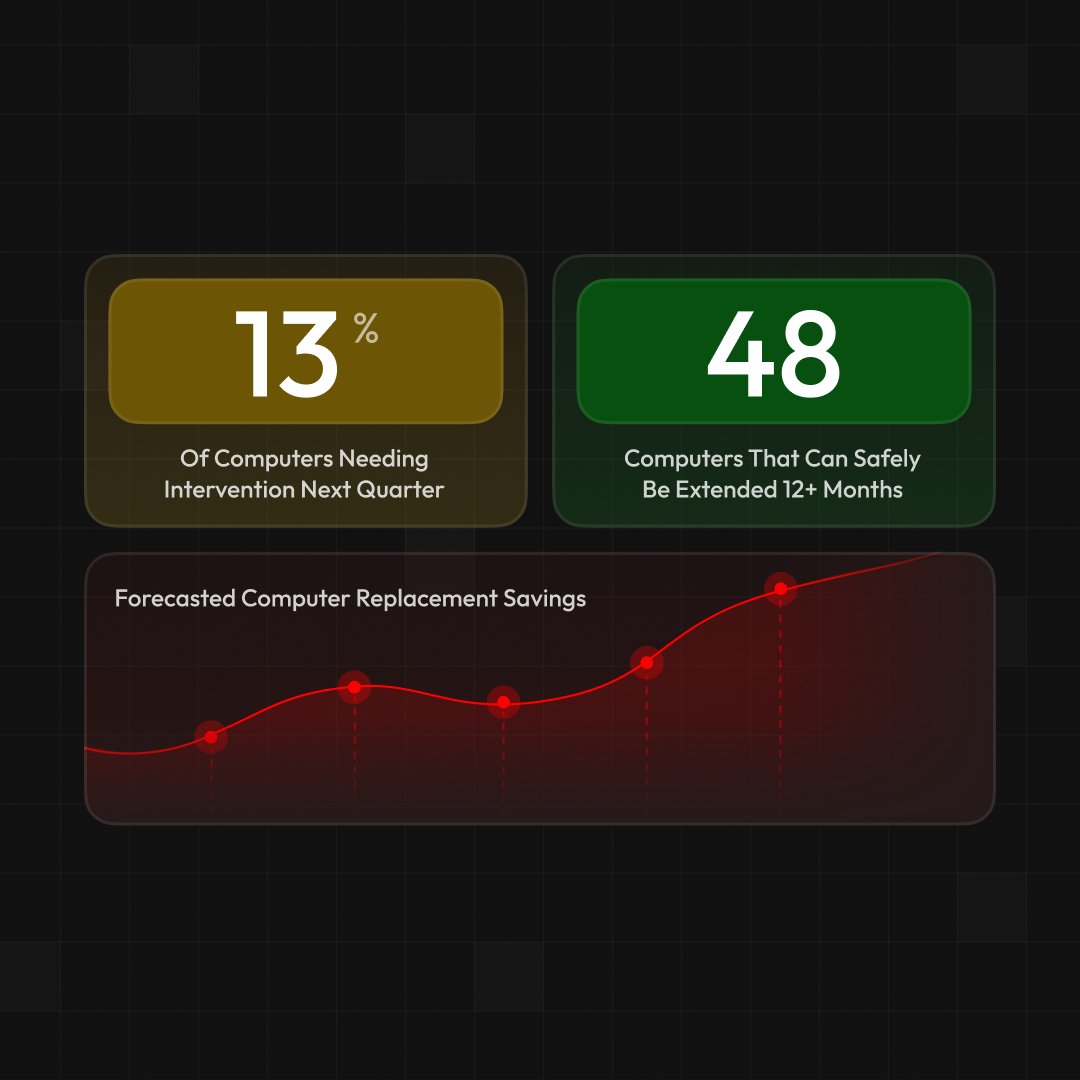
Over time, the effect compounds. A single extra year of lifespan across a 1,000-device fleet can translate into hundreds of thousands in avoided hardware spend, not counting labor savings and productivity gains.
This isn’t about cutting corners; it’s about using data to time replacements smarter. And once you have that visibility, your IT forecasts stop being educated guesses; they become reliable financial plans.
Want to calculate how much you can save with a condition-based replacement policy? Check our Savings Calculator!
Proof in Practice:
PMC’s Lifespan Policy Success Story
The IT team at PMC, a commerce technology company operating across the UK and India, faced the same challenge many IT leaders do: a growing device fleet, recurring incidents, and limited software visibility into what was really happening behind the scenes.
With a small team of around ten professionals, their goal was simple: keep operations smooth, users productive, and costs predictable. But without clear insight into device health, internal replacements and fixes were often based on assumptions rather than evidence.
To move from reactive problem-solving to proactive control, PMC implemented Applixure, giving them continuous visibility into every computer’s health, performance, and software usage. With Applixure, they could see exactly where issues originated, which devices were degrading, and where intervention would make the biggest impact.
The results were measurable:
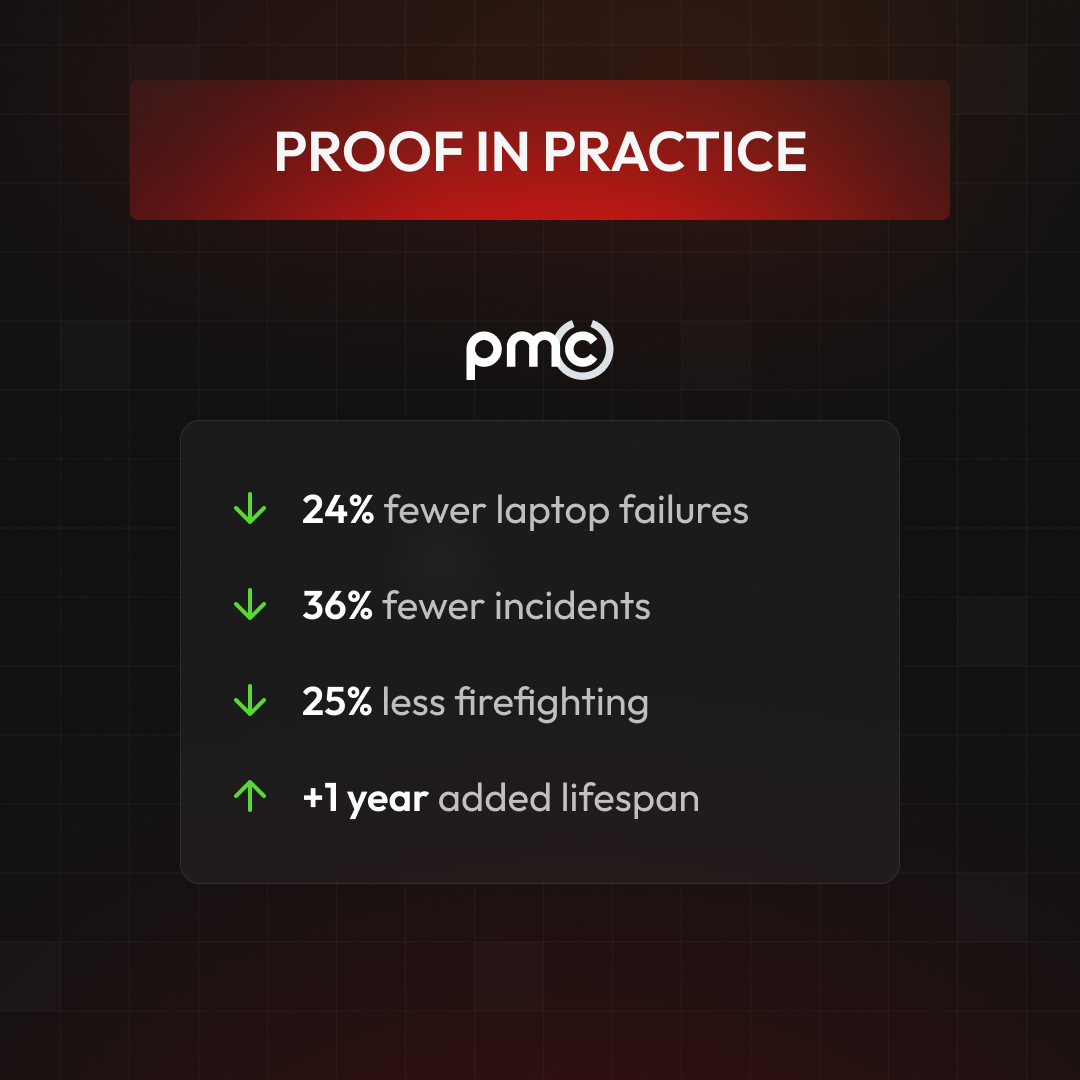
- -24% fewer laptop failures
- -36% fewer overall incidents
- -25% less time spent on firefighting issues
- +1 full year added to average device lifespan
Instead of replacing computers on a schedule, the team now makes data-backed decisions, rebuilding, repairing, or refreshing only when truly needed.
As Senior IT Lead Matt Tombs explains:
“We can catch machines before they fail and fix what’s needed instead of replacing the whole device. It’s helped us make much better use of our existing hardware.”
That shift changed more than just their replacement cycle; it changed how they work. PMC’s IT team now spends more time improving systems and less time reacting to problems, all while maintaining predictable renewal budgets.
Check out PMC's Lifespan Policy Success Story here!
The Next Level:
Enhance Lifespan Forecasting Accuracy with Real User Experience Data
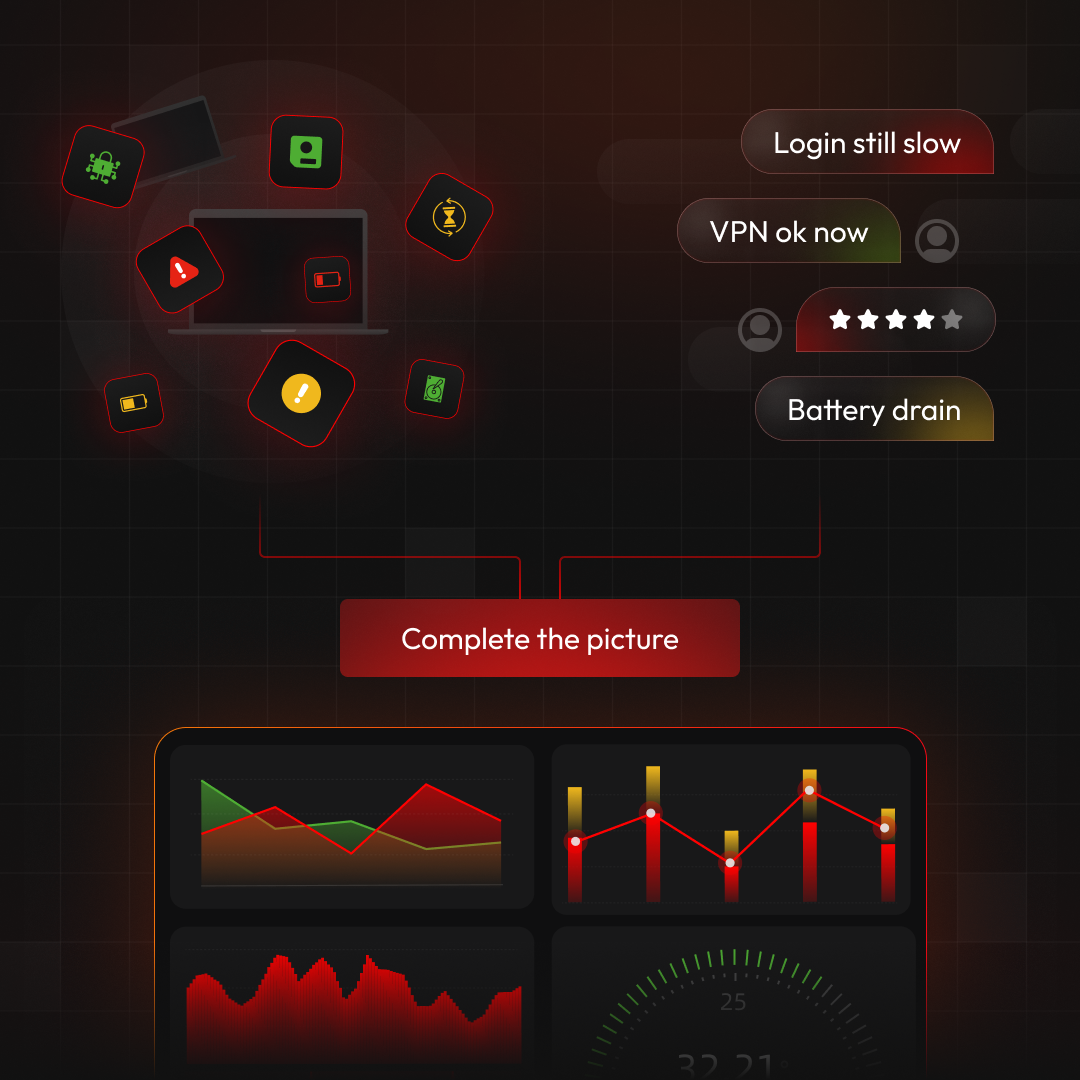
If you really want to take your condition-based lifespan policy to the next level, don’t stop at technical metrics; add user feedback into the mix.
Performance scores and failure rates show how devices behave, but they don’t always show how they’re experienced. A system that looks stable on paper can still feel slow, unreliable, or frustrating to the people using it.
By combining technical data with experience data, you complete the picture. When IT can see both what the device is doing and how it feels to the user, every decision, whether to rebuild, replace, or extend, becomes more accurate and defensible.
This approach also gives you real validation. When you optimize performance or extend device lifespan, you can confirm that those changes are actually improving productivity and satisfaction. It closes the loop between IT operations and the employee experience, proving that a condition-based lifespan policy doesn’t just save budget, it makes work better for everyone.
With Applixure Feedback, this becomes seamless. Built-in user feedback connects directly to technical health data, letting you track how your interventions translate into measurable experience gains. You see instantly whether your optimizations are working, and you have the proof to show it.
Key Takeaway:
Extend When You Can, Replace When You Must
Most IT teams aren’t struggling because of a lack of effort; they’re struggling because of limited unified visibility. Without real data on how computers perform, age, and fail, even the most experienced teams end up making reactive decisions.
Condition-based lifespan policy, powered by Applixure, changes that. It gives IT leaders the insight to see where they stand today and what’s coming next, before problems escalate or budgets spiral.
When you know the real condition of your fleet, you can:
- Replace only what truly needs replacing
- Extend device lifespans through rebuilds, component swaps, or optimization
- Forecast IT budgets with confidence, backed by data instead of guesswork
- Prove value to Finance with measurable savings and predictable planning
The outcome isn’t just cost reduction, it’s control. A clear, evidence-based view of your computer fleet means fewer disruptions, smarter replacements, and more time for IT to focus on long-term improvement.
Download the Guide:
Replace Computers by Condition, Not by Calendar
This guide explains how to move from an age-based to a condition-based replacement policy, where decisions are based on real device health and user impact instead of fixed timelines. It shows how IT teams can safely extend the lifespan of healthy computers, reduce premature replacements, and regain control over hardware spend, without adding operational complexity.
Book a Lifespan Analysis Explainer with Applixure
Book a Lifespan Analysis Explainer Session with Applixure to understand the real condition of your endpoint fleet and where action is actually required.
In this session, we walk through a concrete lifespan analysis, showing how to identify devices that need intervention-whether that's a software rebuild, targeted hardware replacement, or full device renewal-and which devices can safely stay in service.
The outcome is clear, actionable insight that helps you make better use of existing hardware and avoid unnecessary replacements.
Book Lifespan Analysis Explainer here.
Stay Ahead in IT
Get monthly insights and guides for smarter IT management
No spam. Unsubscribe anytime.