
In this article
Share with your community!


Edited & Reviewed
 Edited & Reviewed
Reading time 12 mins
Updated on February 10, 2026
In this article
Share with your community!
Most IT leaders already understand that devices do not degrade by age alone. Performance, stability, workload intensity, and security posture determine whether a device is still fit for purpose far more accurately than the calendar year printed on an asset register.
In practice, many organizations already act on this understanding to some extent by extending devices that perform well and replacing those that clearly struggle.
Despite this, unnecessary computer replacements remains one of the largest and least visible sources of waste in IT budgets. The reason is that the condition is rarely operated as a structured, repeatable system across the entire device fleet.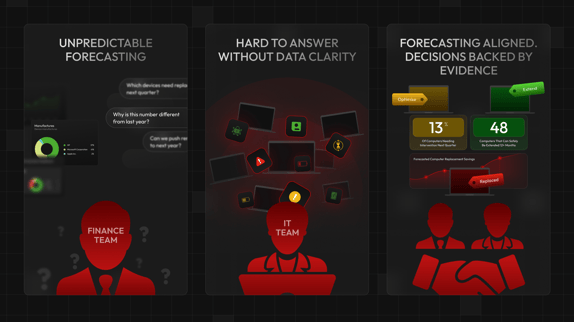
Why “Condition-Based” Is Often Misunderstood
In most organizations, condition-based replacement exists only informally.
- A user complains.
- A device feels slow.
- A ticket escalates.
- An ad-hoc decision is made.
In most environments, condition-based replacement decisions are made reactively. A device is reviewed when a user complains, when performance becomes visibly problematic, or when a ticket escalates. At that point, IT evaluates the situation and decides whether to fix or replace the device.
While these decisions are often reasonable in isolation, they are rarely standardized. The criteria are implicit rather than defined, the signals are scattered across tools, and outcomes depend heavily on who happens to review the device. Over time, this leads to inconsistency across the fleet. Some devices are replaced too early, even though they remain stable, secure, and productive, while others are kept in service longer than they should be because degradation is not detected early enough.
The issue is not whether the condition is considered. The issue is whether the condition is continuously evaluated, consistently interpreted, and applied in the same way across hundreds or thousands of devices.
What a Fully Operational Condition-Based Replacement System Actually Is
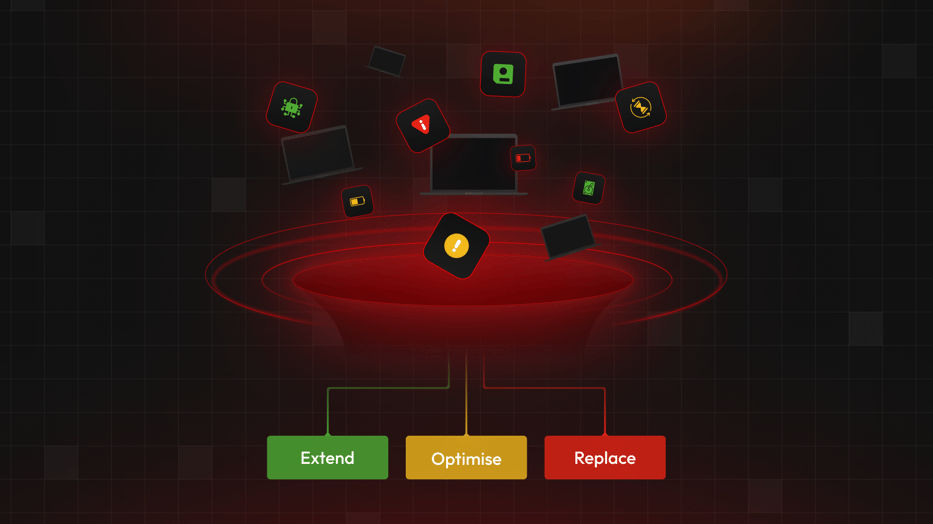
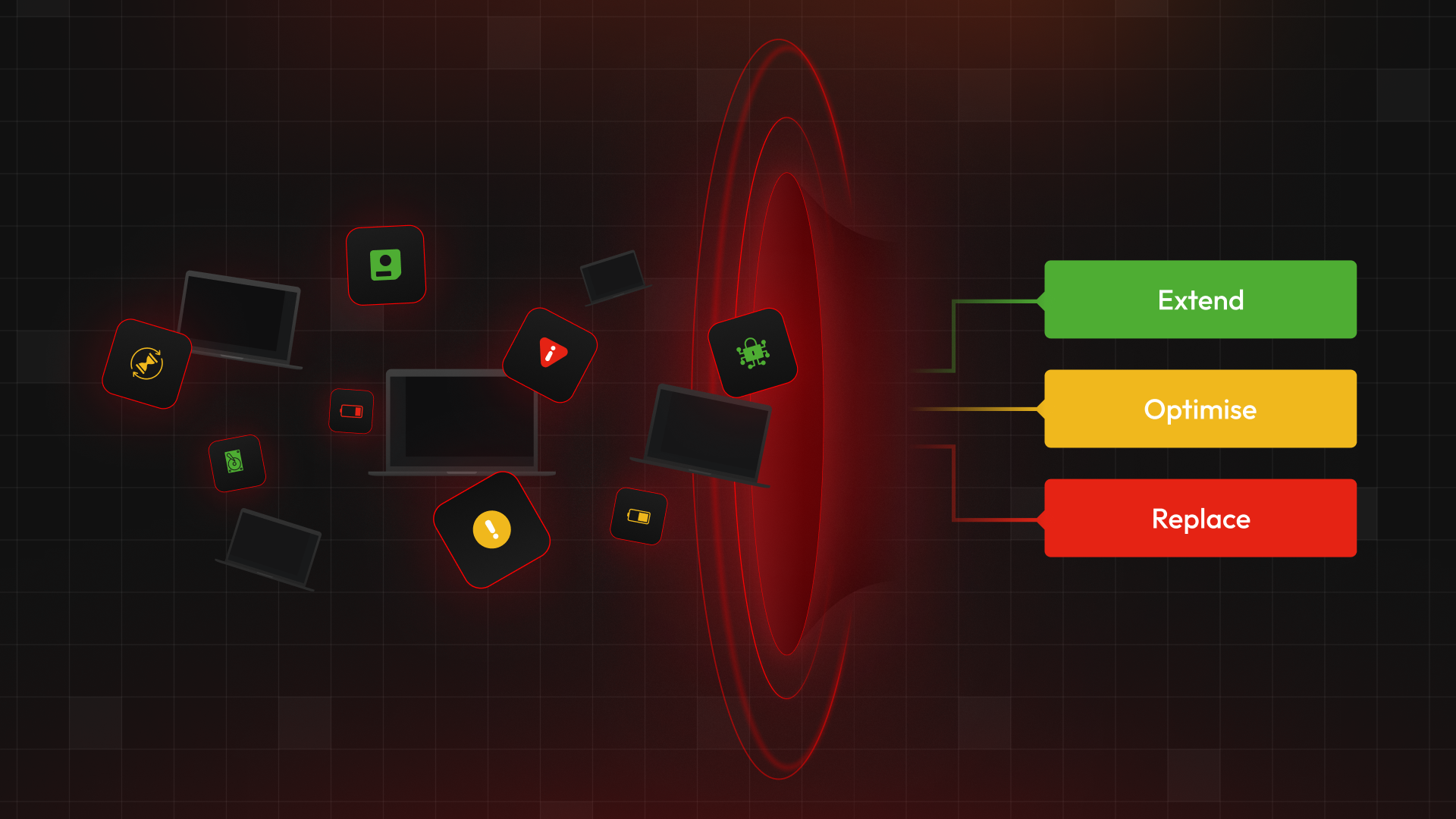
A fully operational condition-based replacement system removes subjectivity and timing bias from lifecycle decisions by applying the same logic to every device, all the time. Instead of waiting for problems to surface, the system continuously evaluates device condition and produces one of three clear outcomes for each endpoint:
- extend,
- fix,
- or replace.
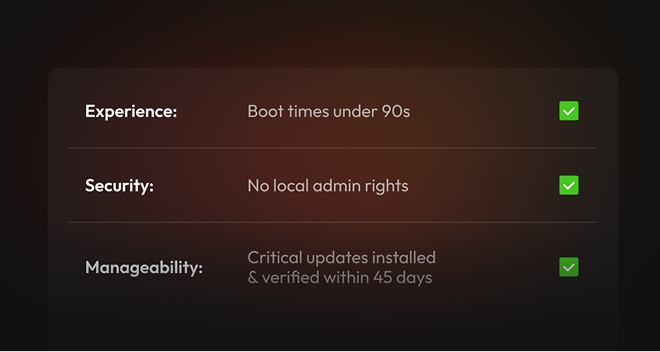
These outcomes are based on predefined criteria that assess security readiness, performance, stability, reliability, and cost-effectiveness relative to the workload the device supports.
Devices with similar condition profiles receive similar decisions, regardless of who owns them, where they are located, or when they happen to be reviewed.
Importantly, this approach does not eliminate planning or refresh cycles. It refines them. Replacement windows and procurement schedules remain intact, but the selection of devices within those windows becomes condition-driven rather than age-driven.
As a result, replacements occur when they meaningfully improve outcomes, rather than simply because a device has reached a certain age.
What Operating This System Requires in Practice
A fully operational condition-based system needs:
- Continuous condition tracking
Not point-in-time reviews or quarterly reports - Performance, stability, health, and security signals
Evaluated together, not in isolation - Clear thresholds
Not gut feel or “it seems fine” - Fleet-wide consistency
So outcomes don’t depend on who is reviewing the device - Device-level explainability
So every decision can be understood and defended - Change history and root-cause visibility
To fix problems instead of replacing devices blindly - Usage and impact context
To prioritize devices that actually affect productivity - Auditability and governance alignment
So decisions hold up under finance, procurement, and leadership scrutiny
Operating a condition-based replacement model at scale requires more than good judgment and ad-hoc reviews. It depends on a set of structural capabilities that most organizations struggle to build and maintain internally:
First, device condition must be evaluated continuously rather than at fixed intervals. Degradation is gradual, and early signals are often subtle.
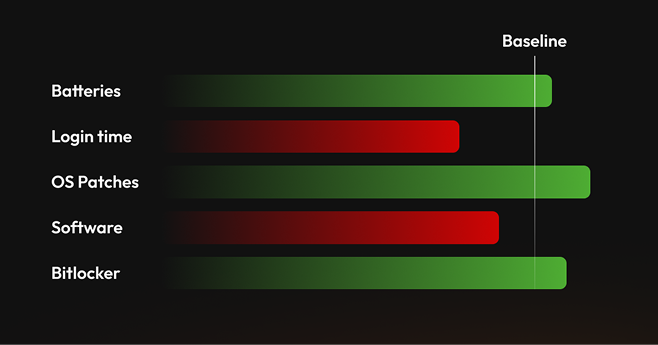
Second, performance, stability, health, and security signals must be assessed together rather than in isolation. A device that appears compliant may still be unstable, and a high-performing device may no longer be secure.
Clear thresholds are required to translate raw telemetry into decision-grade outcomes, and those thresholds must be applied consistently across the fleet. Each decision must also be explainable at the device level, allowing IT to understand why a device was flagged and to defend the outcome to users, finance, or auditors.
Finally, the system must provide visibility into change history and root causes so that fixable devices are repaired rather than replaced unnecessarily.
This is where many internal initiatives stall. The challenge is not conceptual complexity, but operational durability. Keeping logic aligned, signals trustworthy, and decisions auditable across tools and teams is difficult to sustain without a dedicated decision layer.
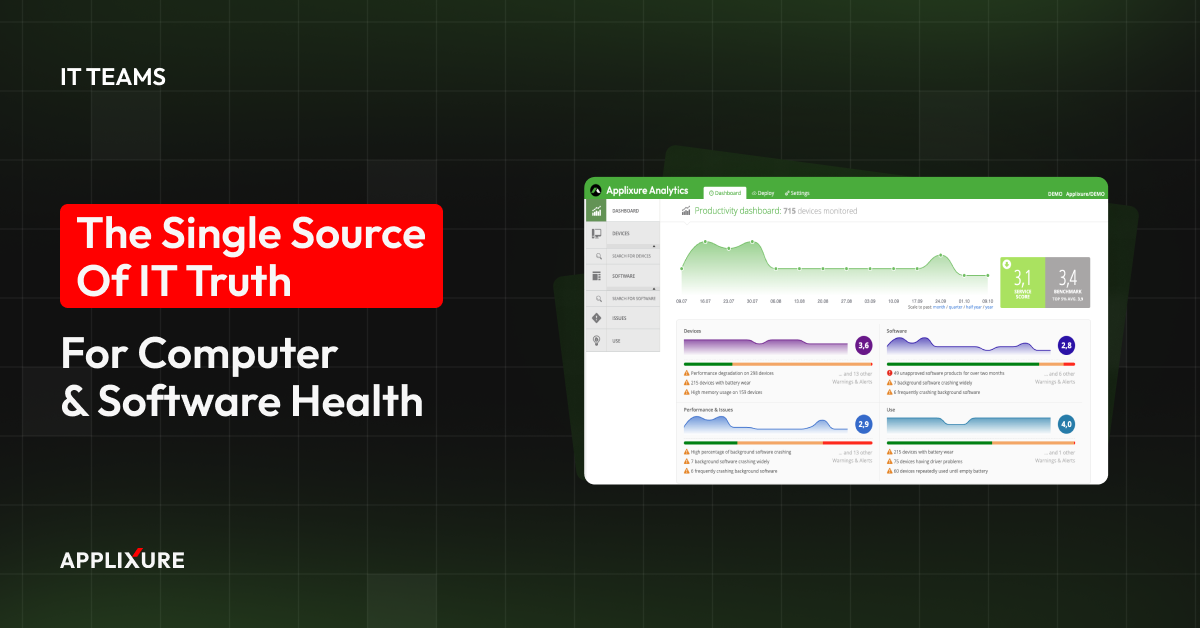
How Applixure Makes This Practical
Out of the box, Applixure provides:
- Condition-based device classification (Extend / Fix / Replace)
- Continuous fleet degradation tracking
- Performance and stability detection
- Security readiness validation
- Device-level drill-down and explainability
- Change history and root-cause analysis
- Software sprawl and version control insight
- Usage and utilization context
- Energy and sustainability insight
Review the Applixure "Use Case Library" for many more use features & use cases.
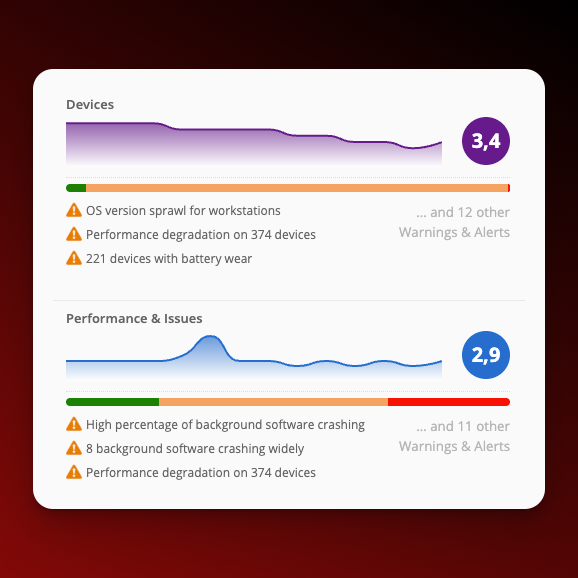
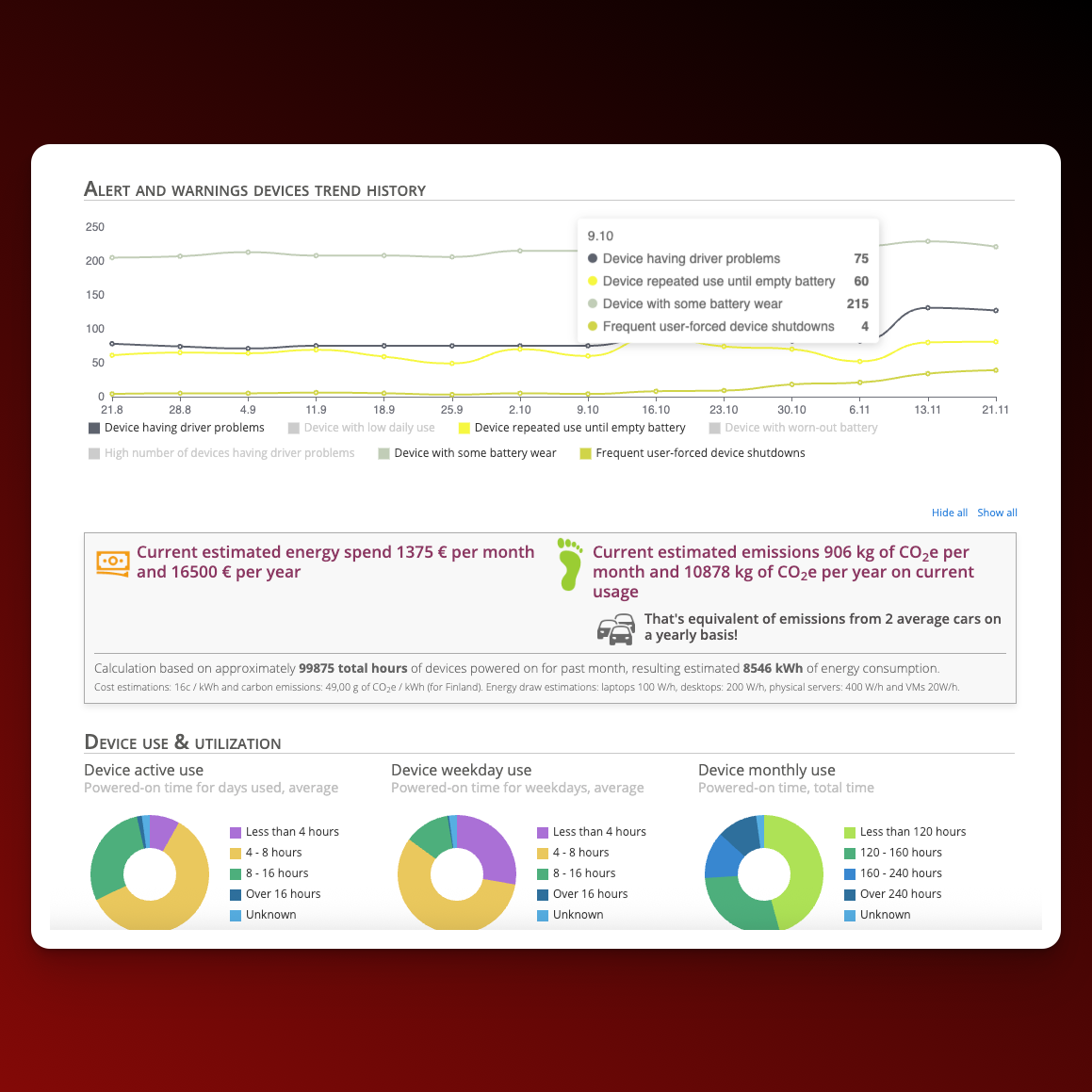
Applixure acts as the decision layer that turns their raw data into usable insight. By continuously processing and visualizing device condition in real time, Applixure (Analytics) provides IT with an always-current view of which devices should be extended, fixed, or replaced. No tools or workflows need to change; Applixure simply makes the information that already exists accessible, comparable, and actionable.
Because this logic is already formalized and maintained, IT teams apply the model rather than building it, avoiding the fragility and drift that often undermine internal approaches.
Calculation Example
To understand the financial impact, consider a common mid-sized environment with 1.000 end-user devices and an average device cost of €1.500. With a standard four-year refresh cycle, approximately 250 devices are replaced each year, resulting in an annual hardware spend of €375.000.
In this example environment, only around 60 to 70 percent of devices reaching the refresh threshold show any form of decline in performance, reliability, or security posture. The remaining 30 to 40 percent are still secure and, fit for purpose and could safely remain in service.
This means that 75 to 100 devices per year are replaced without a clear technical or productivity need. At €1,500 per device, that equates to roughly €112.500 to €150.000 in direct replacement spend that does not materially improve outcomes. When residual value leakage, redeployment inefficiencies, and the compounding effect over multiple refresh cycles are taken into account, it is not unusual for the avoided spend to approach or exceed €250.000 over a relatively short period.
The budget is spent, and the fleet looks newer, but a significant share of that spend does not actually solve a problem.
Calculate How Much You Can Save with Applixure Savings Calculator - Click here.
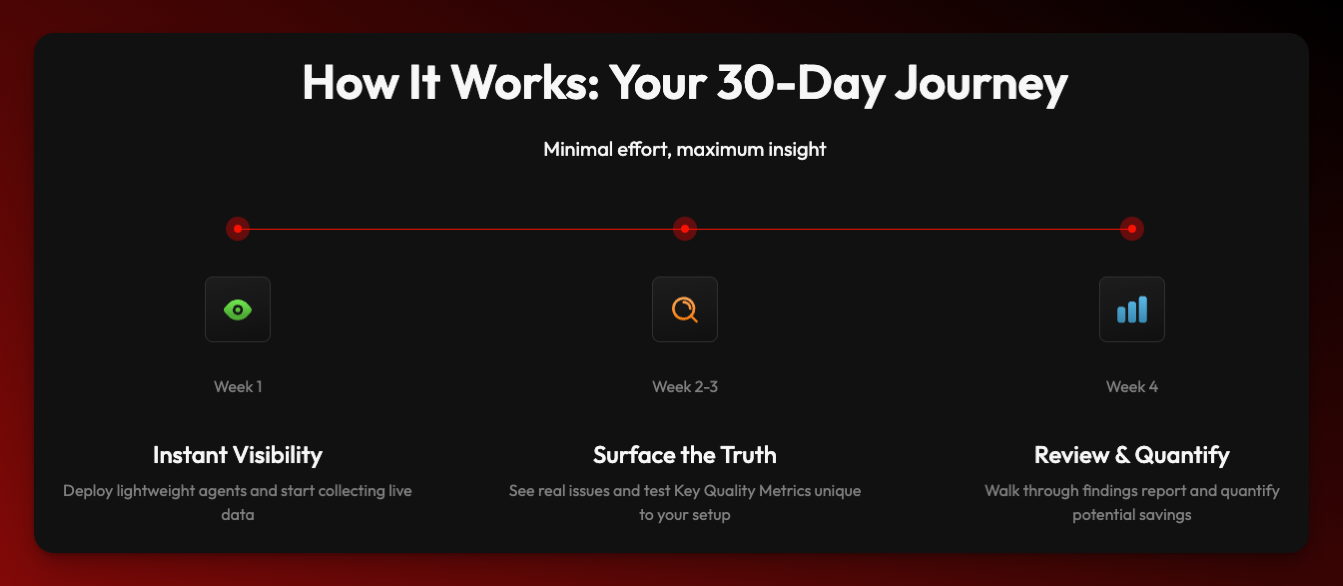
The Low-Risk Way to Start:
Reviewing Upcoming Replacements
The most conservative way to adopt condition-based replacement is not to change policies or refresh cycles. It is simple to review decisions that are already planned.
With Applixure, IT teams can assess upcoming replacement lists through a condition-based lens. Existing procurement plans remain unchanged, and no decisions are forced. The comparison between age-based intent and condition-based reality is used purely as an input.
With Applixure's Trial, IT teams can:
- Keep existing refresh cycles during trial
- Keep all replacement plans intact till the case proves itself
- Simply review upcoming replacements through a condition-based lens
Outcomes are asymmetric:
- Worst case: you gain clarity and validation
- Best case: you avoid thousands in unnecessary replacements immediately

From Trial to Value Within a Day
Applixure is designed to be plug-and-play. A free trial can be started without reconfiguring systems or changing workflows, and meaningful insights are typically available within a day.
The trial exists to replace assumptions with evidence. IT teams can see which devices are genuinely healthy, where early degradation is emerging, and which replacements are truly justified. Decisions can then be made calmly and defensibly, based on real data rather than policy defaults.
The trial period is about learning first:
- See which devices are genuinely healthy
- Identify early degradation before tickets exist
- Understand where replacements are actually justified
Lifespan Analysis for Larger Fleets
For organizations managing more than 200+ computers, Applixure also offers a Lifespan Analysis Explainer Session. It walks through how a fully operational condition-based replacement model works in practice and how it would apply to the organization’s environment.
This session is:
- Explanatory
- (Very) Low effort
- No data access required
- No commitment needed
In the session, Applixure walks through:
- How a fully operational condition-based replacement model works
- How it would apply to your environment
- How YOUR savings are achieved safely and defensibly
It is designed to provide clarity first, decisions later.
Schedule a Lifespan Explainer Session here.
From Intent to Operating Capability
Condition-based replacement has long been understood as a better idea than age-based refresh cycles. What has been missing is the ability to operate it consistently, defensibly, and at scale.
By turning condition into an explicit, continuously applied decision system, IT teams can reduce waste, retain budget, and ensure that every replacement actually improves outcomes. With Applixure, this shift no longer requires disruption, long projects, or internal model-building. It simply requires better visibility and the willingness to review decisions before acting on them.
What is new is the ability to operate it as a system:
- continuously
- consistently
- defensibly
- at scale
and in doing so, recover thousands in IT budget while improving day-to-day operations.
Stay Ahead in IT
Get monthly insights and guides for smarter IT management
No spam. Unsubscribe anytime.